
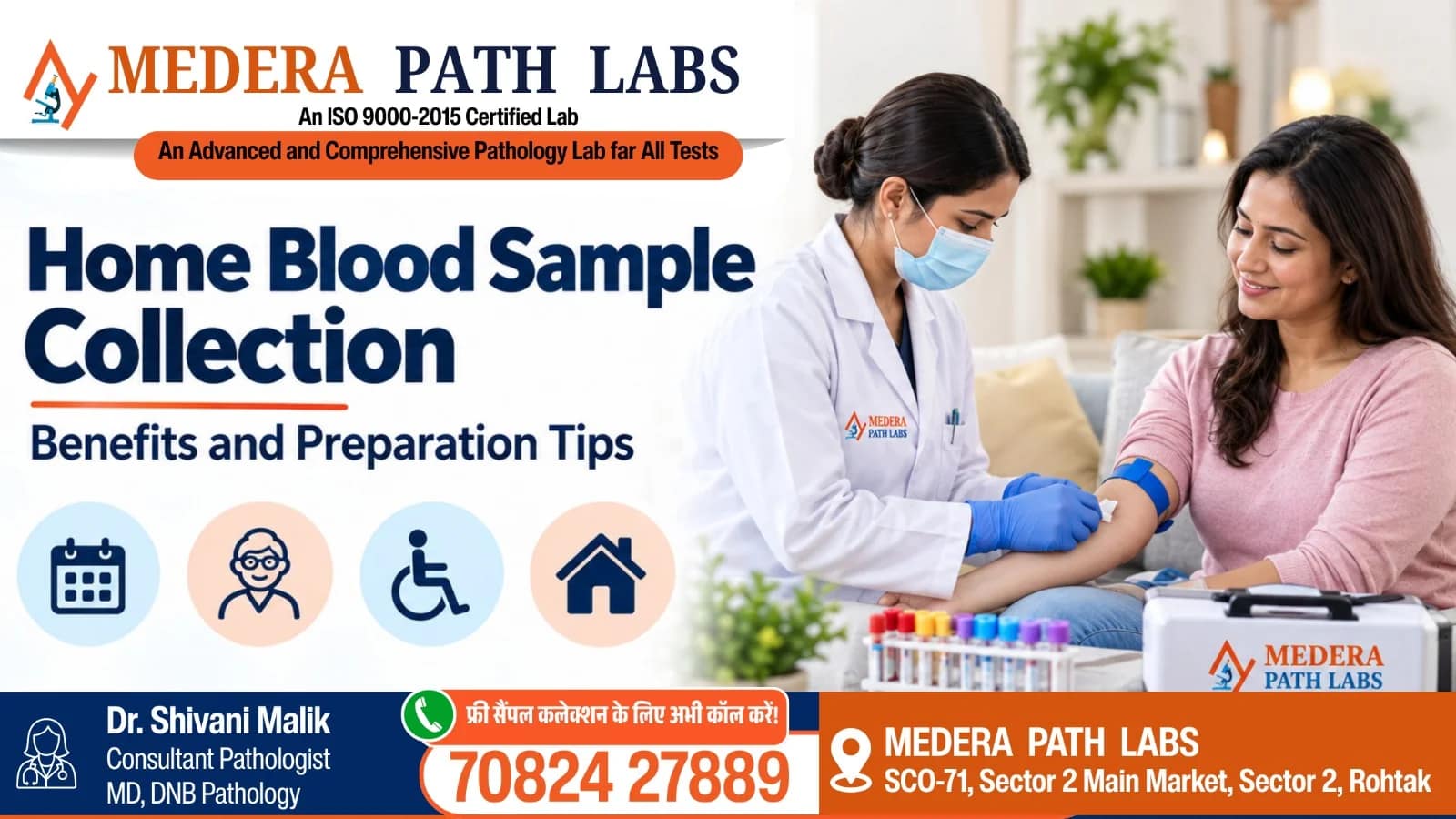
Blood testing is an important part of routine healthcare, but visiting a laboratory is not always convenient. Home blood sample collection allows a trained professional to collect your sample at your home at a scheduled time. Medera Path Labs, Best Pathology lab in Rohtak offers diagnostic testing support that can make routine blood investigations more convenient for patients, senior citizens, working professionals and people who may find travelling difficult.
Home sample collection does not change the purpose of a blood test. The sample is collected following appropriate procedures and sent to the laboratory for testing. Proper preparation before collection is important because food, medicines, exercise and other factors can influence some test results.
What Is Home Blood Sample Collection?
Home blood sample collection is a service where a trained phlebotomist visits your home to collect blood for prescribed or routine laboratory tests.
Depending on the tests required, one or more blood samples may be collected. The samples are then labelled, handled, transported and processed by the laboratory.
Home collection can be useful for tests such as:
• Complete Blood Count (CBC)
• Blood sugar tests
• HbA1c
• Lipid profile
• Liver function tests
• Kidney function tests
• Thyroid tests
• Vitamin tests
• Iron studies
• Other tests advised by your doctor
Preparation requirements vary depending on the tests ordered.
Benefits of Home Blood Sample Collection
- Convenient for Busy Schedules
Travelling to a laboratory, waiting for your turn and returning home can take time. Home collection allows you to schedule sample collection according to the available service timings.
It can be particularly convenient for working professionals and people managing busy family schedules. - Helpful for Senior Citizens
Older adults may find frequent travelling difficult, especially if they have mobility problems or need regular monitoring.
Home sample collection can make routine testing easier without unnecessary travel. - Useful for People with Limited Mobility
People recovering from surgery, illness or injury may not be comfortable travelling to a diagnostic centre.
Home collection gives them an option to have required samples collected without leaving their home. - Convenient for Regular Health Monitoring
People with diabetes, thyroid conditions, high cholesterol, kidney problems or other medical conditions may require blood tests from time to time.
A home collection service can make repeat testing more manageable when advised by a healthcare professional. - Comfortable and Familiar Environment
Some people feel uncomfortable or anxious in hospitals and laboratories. Having the sample collected in a familiar home environment may make the experience more comfortable.
How to Prepare for Home Blood Sample Collection
Correct preparation helps improve the reliability of your test results. However, preparation differs from one test to another.
Check Whether Fasting Is Required
Not every blood test requires fasting.
If you have been asked to fast, your healthcare provider or laboratory should tell you how long to fast. According to MedlinePlus, fasting for certain blood tests commonly means avoiding food and drinks other than plain water for a specified period, often around 8–12 hours.
Never fast unless you have been instructed to do so.
Drink Plain Water
Unless you have been given different instructions, plain water is generally allowed during fasting.
Being properly hydrated can also make it easier to collect blood because adequate fluids help maintain blood volume in the veins.
Avoid tea, coffee, juice, soft drinks or flavoured drinks when you have been told to fast.
Tell the Laboratory About Your Medicines
Some medicines, vitamins and supplements can affect certain test results.
Inform your healthcare provider or laboratory professional about medicines and supplements you take regularly. Do not stop prescription medicines on your own unless your doctor specifically advises you to do so.
Avoid Heavy Exercise Before Certain Tests
Strenuous exercise can temporarily affect some blood measurements.
If your doctor or laboratory has provided specific instructions regarding physical activity, follow them carefully before sample collection.
Avoid Smoking During a Required Fast
If you have been instructed to fast for your test, smoking, chewing gum and strenuous exercise should also be avoided during the fasting period according to MedlinePlus guidance.
Keep Your Prescription or Test List Ready
Before the phlebotomist arrives, keep your doctor’s prescription or list of required tests available.
This helps confirm which samples need to be collected and whether there are any special preparation requirements.
What Happens During Home Sample Collection?
The exact process may vary, but blood collection commonly involves:
- Confirming the patient’s details and requested tests.
- Preparing the required collection tubes and equipment.
- Cleaning the area where blood will be drawn.
- Collecting the required amount of blood from a vein.
- Labelling the sample correctly.
- Safely transporting the sample for laboratory processing.
A routine venous blood draw usually causes only a brief sting or mild discomfort. Slight bruising may sometimes occur at the collection site and generally settles on its own.
What Should You Do After a Blood Test?
After the blood sample has been collected:
• Apply gentle pressure to the collection site as instructed.
• Keep the small dressing or cotton in place for a short period.
• Eat normally after the test if your fasting period has ended.
• Stay hydrated.
• Contact a healthcare professional if you experience unusual or persistent bleeding, swelling or discomfort.
If you feel light-headed after fasting, sit or lie down safely and have something to eat once your test is completed and you are allowed to break the fast.
Why Correct Preparation Matters
Blood test results can be influenced by several factors, including food, medicines, supplements, physical activity and whether preparation instructions were followed correctly.
If you accidentally eat during a required fasting period or forget an important preparation instruction, inform the phlebotomist or laboratory instead of hiding it. Depending on the test, sample collection may need to be rescheduled to help obtain reliable results.
Frequently Asked Questions
No. Many blood tests do not require fasting. Whether fasting is needed depends on the specific tests your doctor has ordered. Always confirm the preparation instructions before sample collection.
Plain water is generally permitted during fasting unless your doctor gives different instructions. Avoid tea, coffee, juice, milk and other drinks when fasting.
It depends on the medicine and the test. Do not stop any prescribed medicine on your own. Inform your doctor or laboratory about all medicines, vitamins and supplements you take and follow their instructions.
Home sample collection can be helpful for senior citizens, people with mobility difficulties, patients recovering at home, working professionals and people who require regular health monitoring.
Conclusion
Home blood sample collection makes routine diagnostic testing easier by bringing the sample collection process to your doorstep. Following the correct fasting, hydration, medication and preparation instructions can help support reliable test results. Patients should always follow their doctor’s advice regarding which tests they need and how often testing should be performed. For routine diagnostic investigations and convenient sample collection services, patients can consider Medera Path Labs, Best Blood test lab in Rohtak and discuss their test reports with a qualified healthcare professional.

